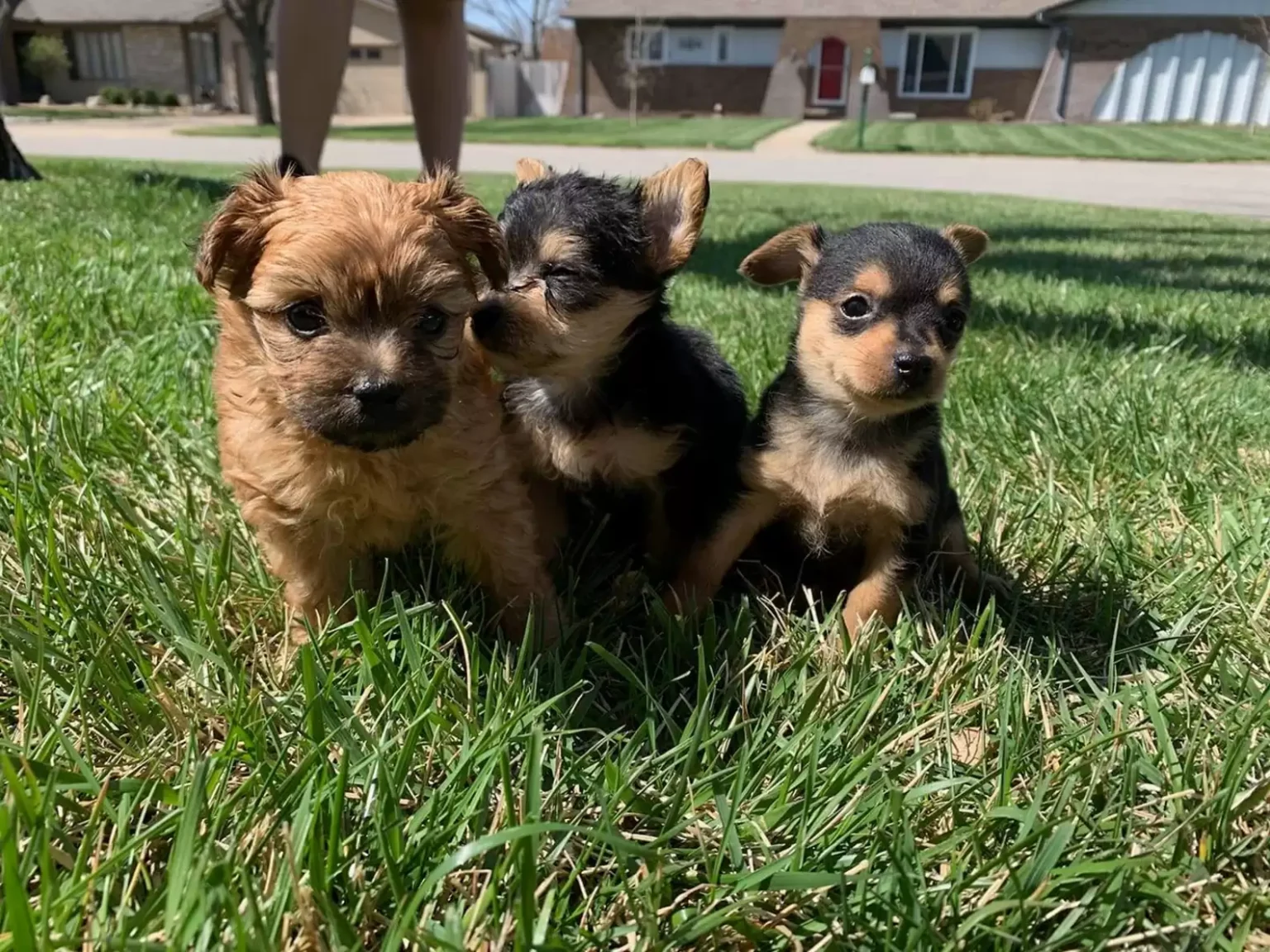
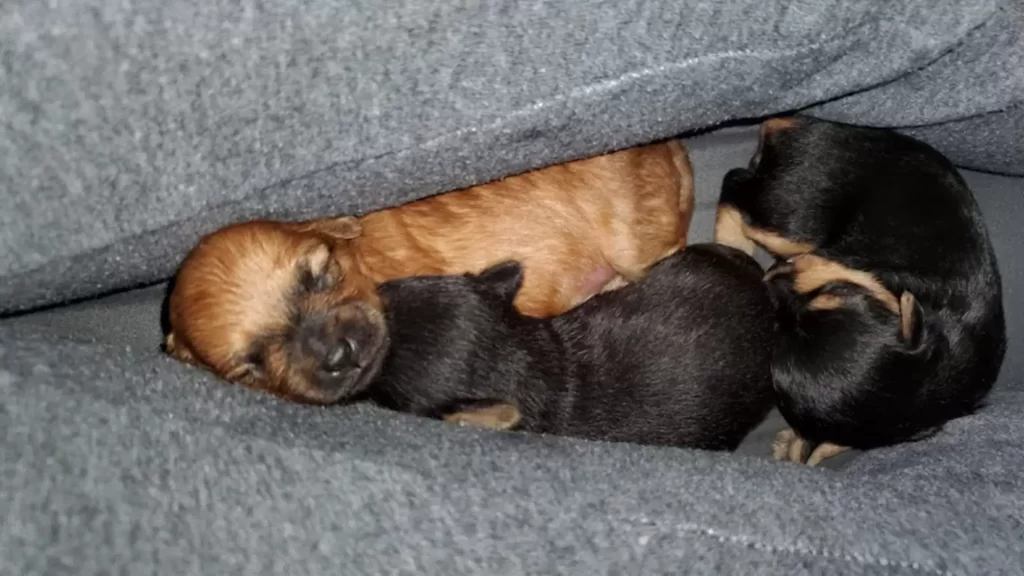
Rocky, Chip, and Brownie were brought to the Helping Hands Humane Society (HHHS) Topeka after their mother left. The three tiny dogs’ background was not fully disclosed to the rescue. All they needed to know was that they needed help, and that was enough.
The puppies were barely a week old and needed bottle feeding, so a foster family decided to take them in so they could receive the care and attention they required. All three puppies essentially had the same appearance when they originally entered the rescue’s care.
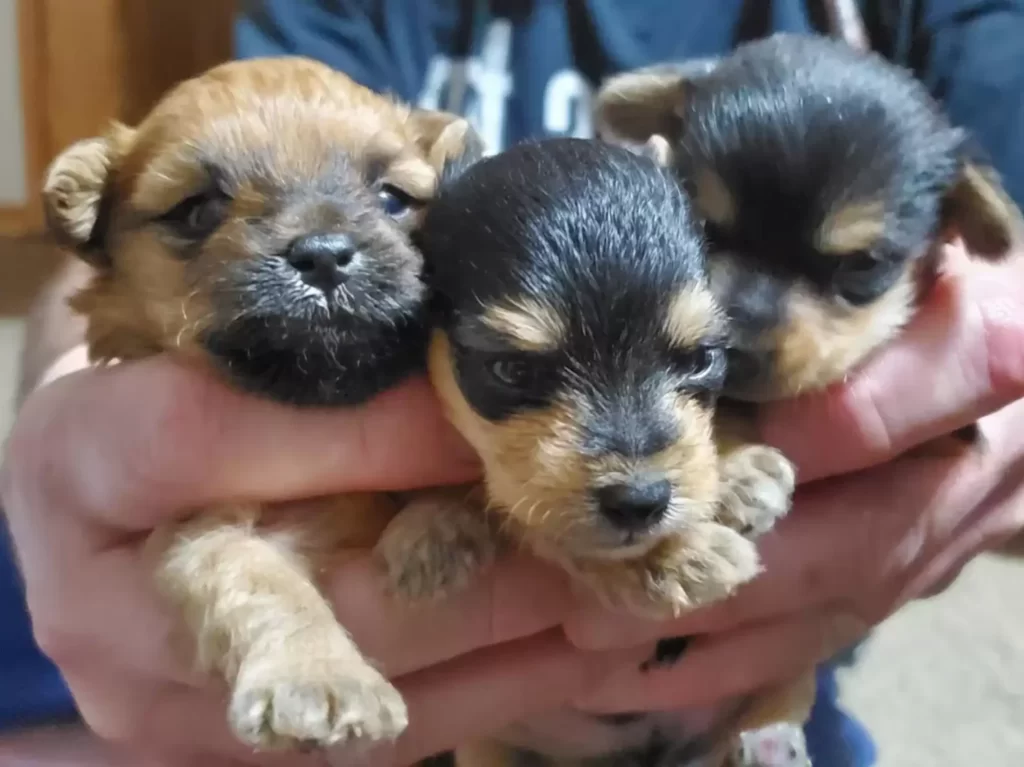
The three brothers’ individual personalities and physical characteristics began to evolve as they grew up.
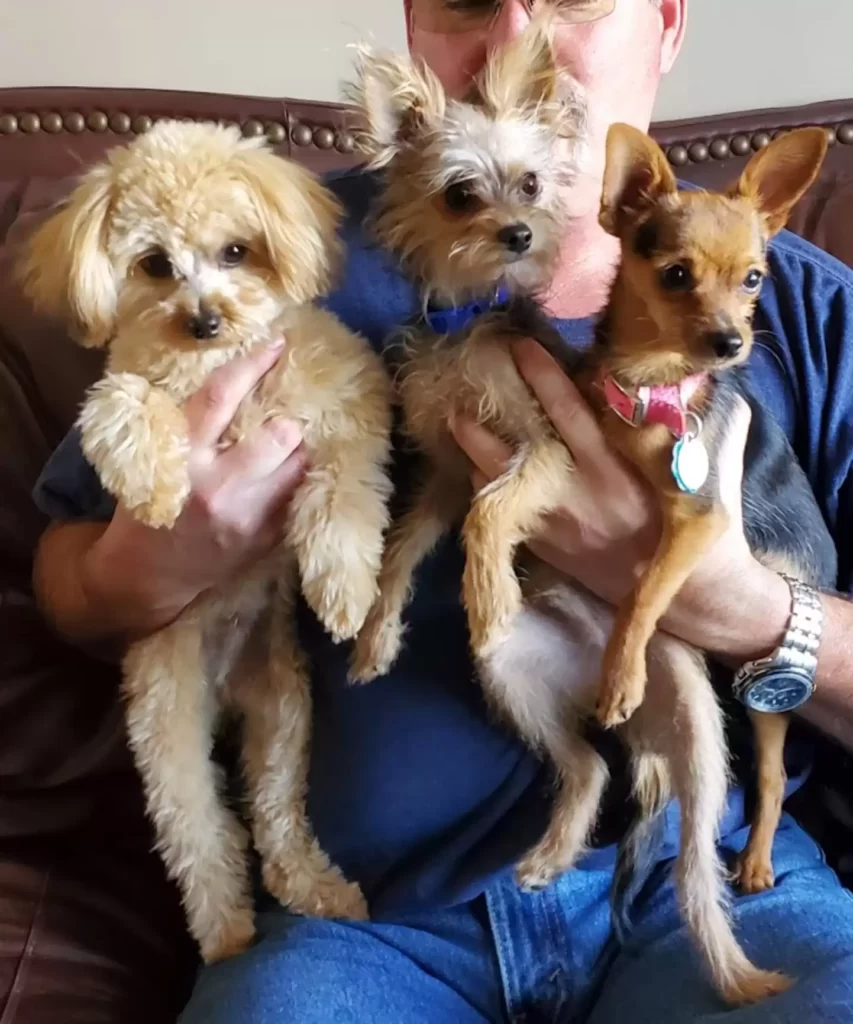
The puppies’ peculiarities could be seen in the images as early as 3 weeks old, according to Emi Griess, the HHHS Topeka communications coordinator, who spoke to The Dodo. “Rocky’s coat was longer and silkier than Brownie’s, although Chip still had the appearance of a young Chihuahua. We were able to distinguish that all three of them will appear drastically different from one another at roughly 6 to 7 weeks old.
It was difficult to tell the pups apart as siblings since they swiftly all matured into their adult selves.
I was SO shocked, Grace Clinton, director of business development and special events at HHHS Topeka, told The Dodo. When I discovered they were siblings, I was shocked. I had never seen anything like that.
After the boys had settled into their new homes, their families decided to have each dog’s DNA tested to determine what breed it actually was. Rocky, a Yorkie-like dog, hasn’t yet received his findings, but Chip, a Chihuahua, and Brownie have, and they are unquestionably rather fascinating.
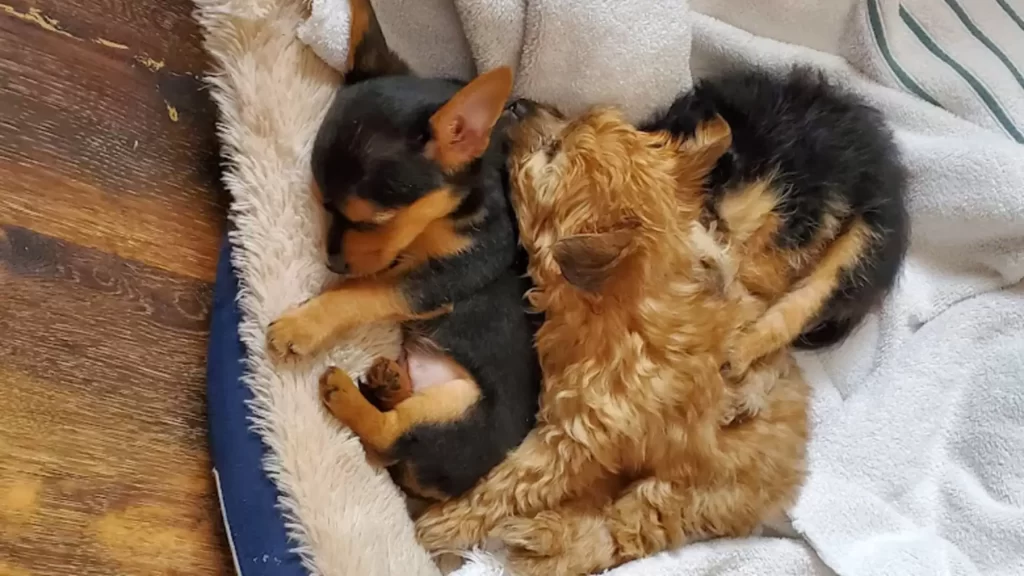
In Chip’s data, silky terriers make up 22% of the population, miniature poodles 19.8%, Yorkshire terriers 16.1%, Chihuahuas 13.2%, Pomeranians 8.6%, Russell-type terriers 6.9%, and supermutts 13.4%. According to Brownie’s statistics, 19.9% of her puppies are Yorkshire terriers, 17.8% are silky terriers, 17.4% are miniature poodles, and 16.6% are Chihuahuas, 12.3% are dachshunds, 7.7% are Pomeranians, and 8.3% are supermutts.
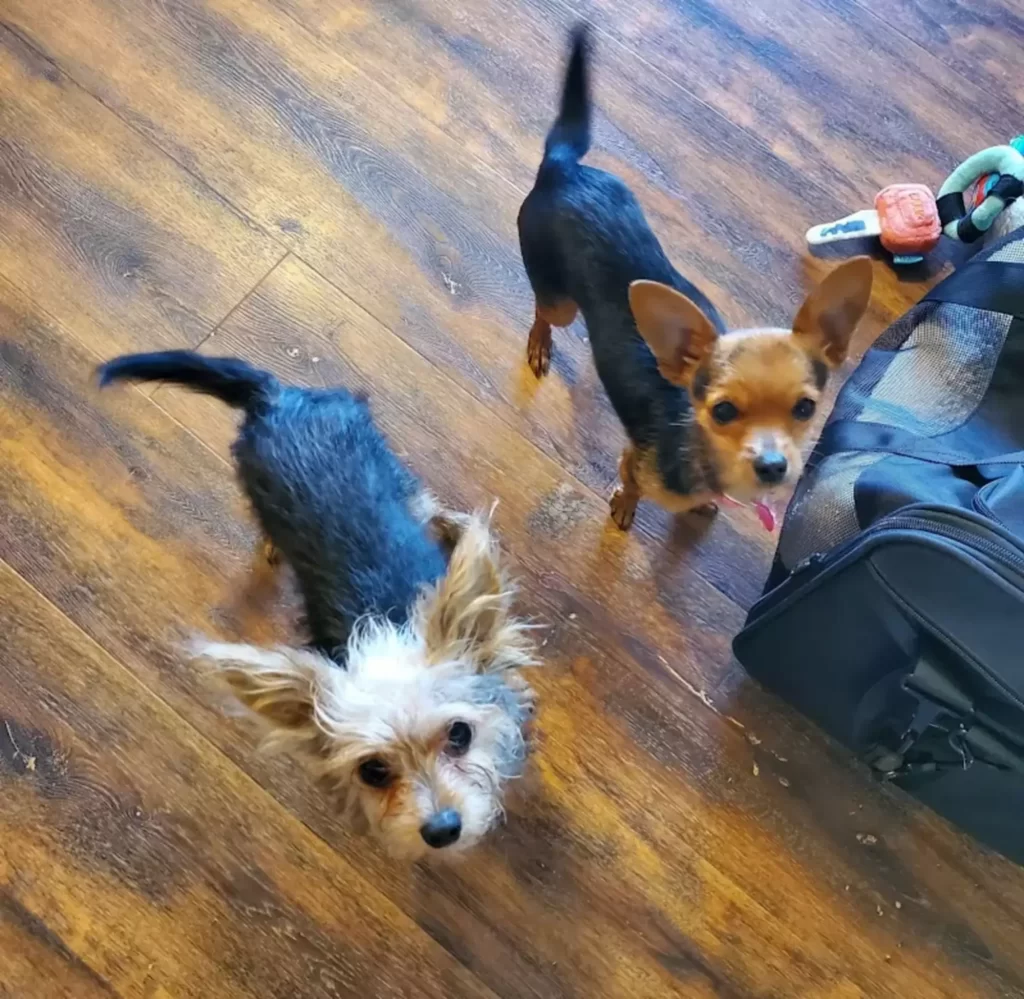
The boys’ forever families can now certify that although they may physically differ greatly from one another, they have quite similar personalities.
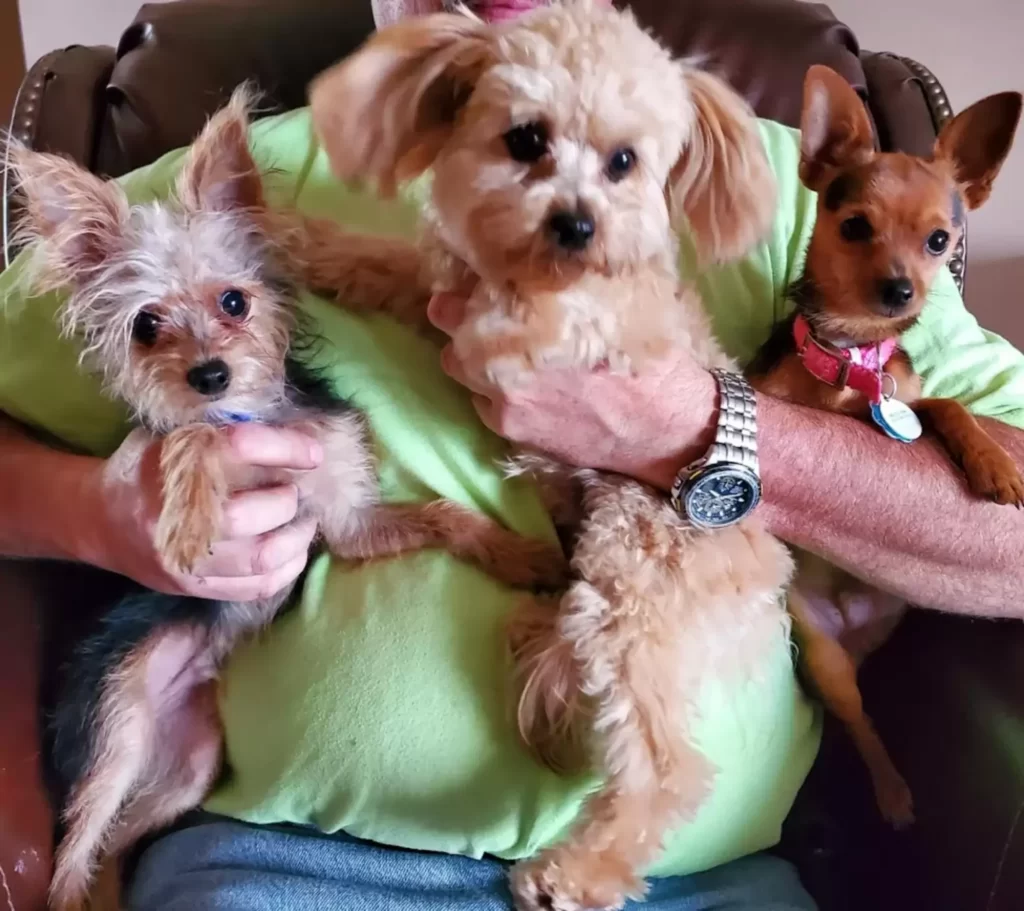
All three canines truly adore going on outings and making friends with every single person and animal they come across. Even while they don’t really resemble siblings, they act like brothers, which makes the whole thing even cuter.